
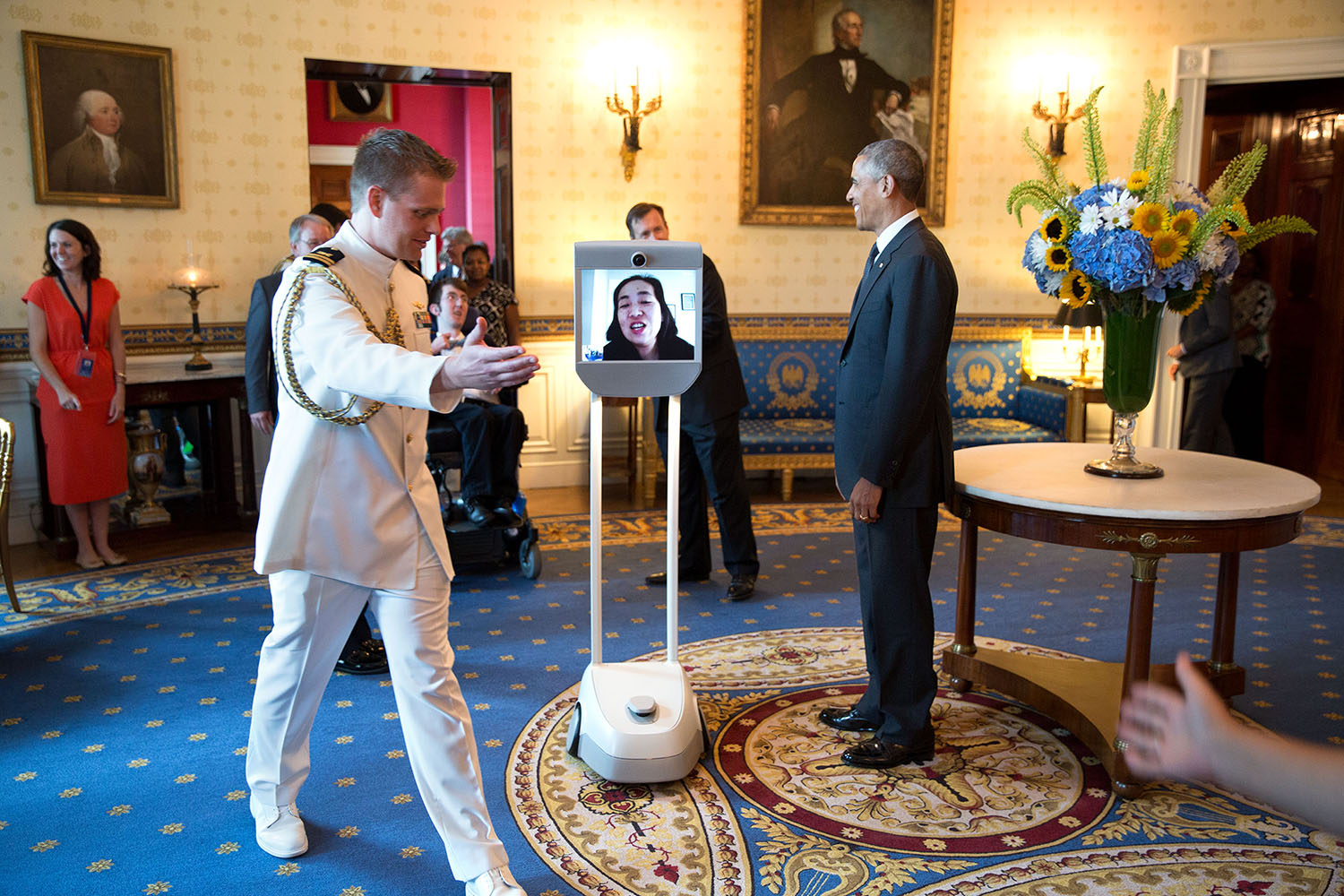
Alice Wong died in San Francisco on the 14th of November, 2025, at 51, of an infection. Doctors had told her parents she would not live to 18.1 She spent the years in between proving that disabled people are the best authorities on their own lives and building spaces where they could say so.
Almost a year later, I keep coming back to her work. It belongs on this blog because Alice lived with a progressive neuromuscular disease, and because she spent her life arguing against the way charities, media, and medicine package people like us if we unmask ourselves or are unable to pass as fully abled.
Who She Was
Alice was born in 1974 in the Indianapolis suburbs to parents who had immigrated from Hong Kong.2 She was born with spinal muscular atrophy (SMA), a progressive neuromuscular disease.3 Some obituaries called it muscular dystrophy (MD).4 SMA and CMT are different diseases, but they share a lot in their lived experience: weakening muscles, braces and wheelchairs, repeat visits to the same neuromuscular clinics knowing there’s no cure, and the same habit the world has of talking over us.
Alice earned a BA in English and sociology in 1997 and a master’s in medical sociology from the University of California, San Francisco, where she then worked as a staff research associate for more than a decade.5 An episode of respiratory failure had already forced her to leave her first college and move back in with her parents.6
President Obama appointed Alice to the National Council on Disability, where she served from 2013 to 2015. In 2015 she attended the White House reception for the 25th anniversary of the Americans with Disabilities Act by telepresence robot, the first person to visit the White House and a president that way.7 In 2024 she was named a MacArthur Fellow.8
Alice was blunt about what kept her alive. In 2020 she described herself as “tethered to and embedded with” a power wheelchair, a non-invasive ventilator running off her chair’s battery, and metal rods fused to her spine.9 After medical emergencies in 2022 she spoke through text-to-speech software, and in her memoir she called herself a “disabled cyborg.”10
Visibility, Not Inspiration
People with bodies in physical decline from an early age tend to be treated to others’ pity or hostility when it’s visible. When it’s not visible, it’s assumed no disability could be present at all. The reality of the person is kept at bay and denied in both cases.
In 2014 Alice Wong founded the Disability Visibility Project as a partnership with StoryCorps, encouraging disabled people to interview one another and record oral histories that could be archived at the Library of Congress.11 It was supposed to last a year.12 It grew into a blog, a podcast, anthologies, and a community. Its statement of purpose begins with a belief “that disabled narratives matter and that they belong to us.”13
Belong to us. Not to a charity’s fundraising team, a newsroom looking for an uplifting segment, or a sponsor with something to sell. The MacArthur Foundation described the project’s goal as amplifying “the unfiltered voices of disabled people.”14 Unfiltered is the key word. These were not overcoming stories edited to make donors feel good. They covered addiction, abuse, mental health, poverty, and the daily mechanics of living in one’s actual community instead of being cloistered away in an institution.
That is the opposite of what I described in “Barbies and Warriors,” where a patient charity sells CMT through “CMT Barbie” and “CMT warrior” stories of triumph, sponsors’ products, and an unproven private therapy. In that model, a disabled person is useful as a face: brave, attractive, winning. Wong’s model handed people the microphone and let them say what was actually happening, including the stories that people in standard marketing and fundraising roles believe will undermine their business goals.
We need more stories about us and our culture.
Alice Wong, final message, November 2025
Alice also built political tools. In 2016 she co-founded #CripTheVote with Andrew Pulrang and Gregg Beratan. This is a nonpartisan online movement that brought disabled voters and politicians into conversation about disability issues.15 With novelist Nicola Griffith she ran #CripLit chats for disabled writers. None of this needed anyone’s permission. It needed a hashtag, a schedule, and people who were tired of being talked about instead of conversed with.
Triage and Who Counts
In April 2020, as hospitals drafted plans to ration ventilators, Wong wrote an essay for Vox with the headline “I’m disabled and need a ventilator to live. Am I expendable during this pandemic?” She warned that rationing frameworks “often put people like me at the bottom of the list,” and she went after the idea that “quality of life” can be measured by people who assume a good life is one without disability or pain. She imagined a doctor reading her chart and deciding to take her ventilator for someone with “a better shot at survival.”16
Disabled people are not acceptable collateral damage in this pandemic.
Alice Wong, Vox, 4 April 2020
Anyone with a progressive neuromuscular disease should read that essay. Most people with CMT will never need a ventilator, but many of us will someday be the patient whose chart says “progressive,” “wheelchair,” or “requires assistance.” Wong’s point was that those words should not quietly lower our place in line, and that disabled people have to be in the room when the rules are written.
What CMTers Should Learn From Alice
Tell it yourself. You don’t need a patient charity, a pageant, or a sponsor to tell your story. You can record it, write it, or post it on your own terms, and you can include the boring, expensive, painful parts.
Organize with each other. #CripTheVote showed that disabled people can set the agenda online and make politicians answer to it. CMTers in Canada could do more of this around provincial disability benefits, home care, and assistive devices programs.
Watch who decides your worth. Triage protocols, “quality of life” scores, and funding formulas are written by someone. Wong insisted that disabled people be among them.
Take your time. I wrote here about crip time, the disability studies idea of bending the clock to fit disabled bodies and minds instead of the other way around. Wong outlived her doctors’ predictions by more than thirty years. Her last message began, “Hi everyone, it looks like I ran out of time.”17 That time was hers, and she spent it on what mattered to her, from cooking for her parents to running a media project, not on proving anything to people who had written her off.
Alice Wong’s Bluesky account, @sfdirewolf, has been quiet since her death; her last posts there are from early November 2025. The Disability Visibility Project site remains online, with her books, interviews, and a Celebration of Life page.
Read Alice’s Writing
- Disability Visibility: First-Person Stories from the Twenty-First Century (editor, Vintage, 2020), with an adapted edition for young adults (Delacorte, 2021).
- Year of the Tiger: An Activist’s Life (Vintage, 2022), her memoir.
- Disability Intimacy: Essays on Love, Care, and Desire (editor, Vintage, 2024).
- “I’m Disabled and Need a Ventilator to Live. Am I Expendable during This Pandemic?” Vox, 2020.
- The Disability Visibility podcast and the DVP interviews. The project’s website also lists a further anthology, Disability Vulnerability, on the COVID-19 pandemic and its fallout, announced in 2024 for publication by Vintage in spring 2026, but it seems not to have been released yet, as of October 2026.
Notes
- Veltman, “Alice Wong Dies at 51.” ↩︎
- Veltman, “Alice Wong Dies at 51.” ↩︎
- STAT, “STATUS List 2025”; Chapman, “SMA Community Honors Legacy.” ↩︎
- Veltman, “Alice Wong Dies at 51”; Risen, “Alice Wong, Writer and Relentless Advocate.” ↩︎
- Disability Visibility Project, “About”; Risen, “Alice Wong, Writer and Relentless Advocate.” ↩︎
- Risen, “Alice Wong, Writer and Relentless Advocate.” ↩︎
- Veltman, “Alice Wong Dies at 51.” ↩︎
- MacArthur Foundation, “Alice Wong.” ↩︎
- Wong, “Am I Expendable during This Pandemic?” ↩︎
- Veltman, “Alice Wong Dies at 51.” ↩︎
- MacArthur Foundation, “Alice Wong”; Disability Visibility Project, “About.” ↩︎
- Risen, “Alice Wong, Writer and Relentless Advocate.” ↩︎
- Disability Visibility Project, “About.” ↩︎
- MacArthur Foundation, “Alice Wong.” ↩︎
- MacArthur Foundation, “Alice Wong”; Disability Visibility Project, “About.” ↩︎
- Wong, “Am I Expendable during This Pandemic?” ↩︎
- Disability Visibility Project, “Celebration of Life.” ↩︎
Sources
- Chapman, Mary. “SMA Community Honors Legacy of Disability Rights Activist Alice Wong.” SMA News Today, January 7, 2026. https://hcp.smanewstoday.com/2026/01/07/sma-community-honors-legacy-of-disability-rights-activist-alice-wong/.
- Disability Visibility Project. “About.” Accessed October 10, 2026. https://disabilityvisibilityproject.com/about/.
- Disability Visibility Project. “Celebration of Life.” 2026. https://disabilityvisibilityproject.com/celebration-of-life/.
- MacArthur Foundation. “Alice Wong: Writer, Editor, and Disability Justice Activist.” MacArthur Fellows, Class of 2024. 2024. https://www.macfound.org/fellows/class-of-2024/alice-wong.
- Marke B. “Disability Activist and Oracle Alice Wong Passes Away at 51.” 48 Hills, November 15, 2025. https://48hills.org/2025/11/disability-activist-and-oracle-alice-wong-passes-away-at-51/.
- Risen, Clay. “Alice Wong, Writer and Relentless Advocate for Disability Rights, Dies at 51.” Boston Globe, November 16, 2025. https://www.bostonglobe.com/2025/11/16/metro/alice-wong-writer-relentless-advocate-disability-rights-dies-51.
- STAT. “STATUS List 2025: Alice Wong of the Disability Visibility Project.” 2025. https://www.statnews.com/status-list/2025/alice-wong/.
- Veltman, Chloe. “Disability Rights Activist and Author Alice Wong Dies at 51.” NPR, November 15, 2025. https://www.npr.org/2025/11/15/nx-s1-5609903/disability-rights-activist-author-alice-wong-dies-51.
- Wong, Alice. “I’m Disabled and Need a Ventilator to Live. Am I Expendable during This Pandemic?” Vox, April 4, 2020. https://www.vox.com/first-person/2020/4/4/21204261/coronavirus-covid-19-disabled-people-disabilities-triage.
Leave a Reply