Charcot-Marie-Tooth (CMT) disease is the most common family of inherited peripheral neuropathies. A 2023 meta-analysis of 31 studies put its pooled prevalence at about 18 per 100,000 people, or roughly 1 in 5,700 (Ma et al., 2023). Estimates ran higher in some groups, up to about 31 per 100,000 in Northern Europe, though the authors found those subgroup differences weren’t statistically significant and called for better studies. Despite how common it is, CMT is little known outside a few research centres and the families who live with it.
A name due for a rethink
The name “Charcot-Marie-Tooth” comes from the three physicians who described the disease in 1886, and it says nothing about what the disease is. (Thanks to Dr. Tooth, plenty of people assume it has something to do with teeth.) Its old numbered types, CMT1, CMT2, and so on, were sorted by nerve conduction tests before most of the causal genes were known.
Today more than 100 genes are linked to CMT, and specialists have proposed naming its forms by inheritance, nerve pathology and the causal gene instead. In a 2018 survey by Magy and colleagues, 65% of the 107 CMT specialists who responded said the old classification needed to change. The standard clinical reference, GeneReviews, now uses that gene-based system alongside the historical labels. You’ll also see the older term Hereditary Motor and Sensory Neuropathy (HMSN), and many Canadian groups simply say neuromuscular disease (NMD).
Where CMT’s boundaries lie is still debated. One example is SORD-related neuropathy, caused by an enzyme deficiency and now commonly called CMT-SORD, which I’ve written about in “The ‘First Treatable CMT Disease’ Is Neither CMT Nor a Disease.” For more on how the types got so tangled, see “All Types of CMT Are ‘Axonal.’” And for a look at who is stretching the CMT label wider, and why that matters, see “The Sloth’s Taxonomy.”
What it’s like to have CMT
What a disease is to scientists and doctors is very different from what it is like to live with it. The same disease may express itself very differently from person to person, even within the same family. But a simple description that fits the most common cases is that CMT is the slow, progressive loss of nerve function in the feet and legs, and often the hands and arms.
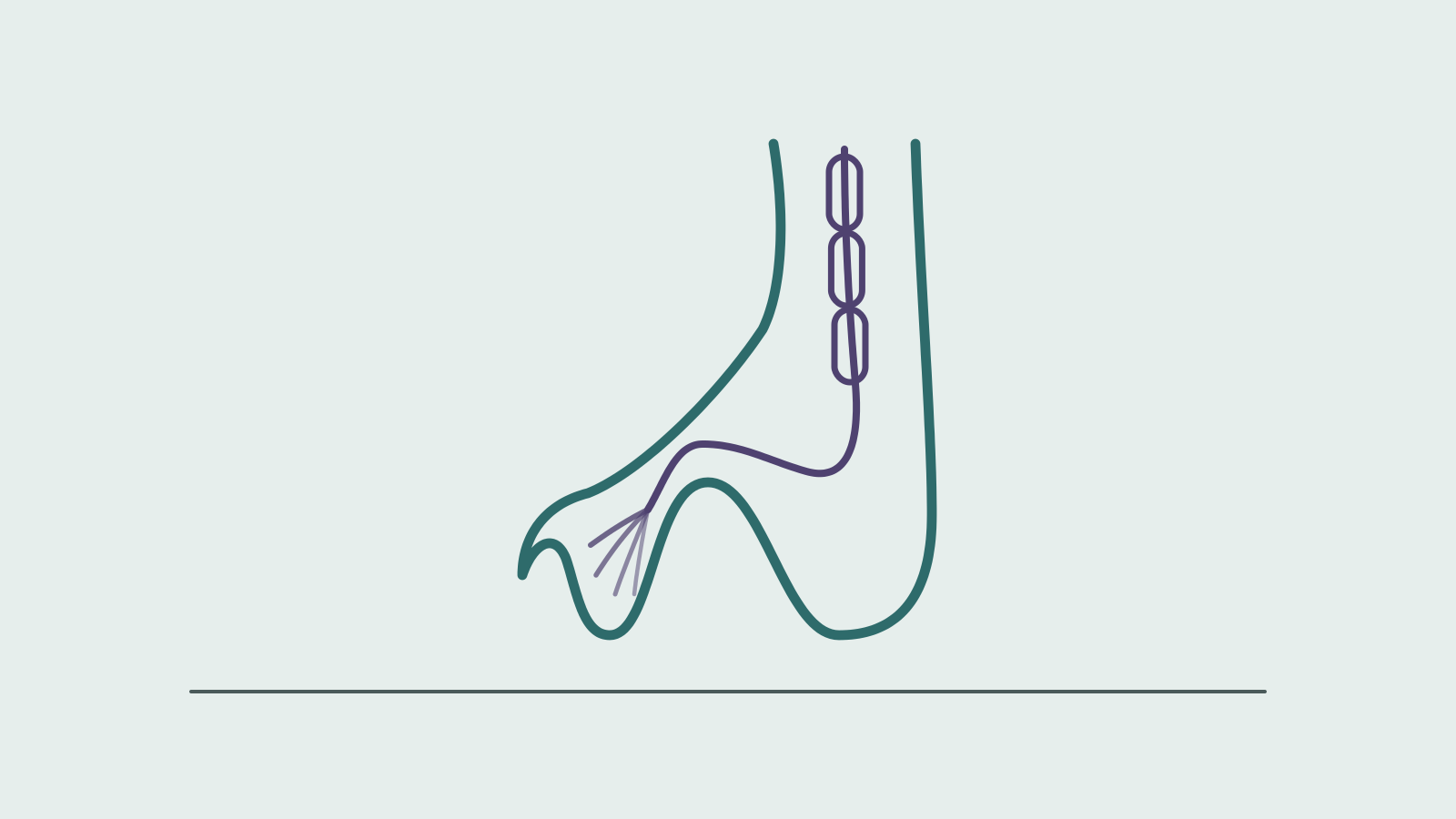
What most people with CMT feel first are the effects of their longest nerves failing. Nerve signals are delayed and partly or entirely lost on their way to the ankles, feet, and toes, or the wrists, hands, and fingers. The muscles those nerves serve weaken and waste. The damage may be mild, moderate or severe. A common deformity is the high-arched “CMT foot,” or pes cavus, which tends to bring progressively more disabling and painful problems.
Most forms of CMT are not immediately debilitating and don’t shorten life expectancy. Some do.
Bones may develop improperly and weaken. Stiffness and joint pain are common. Over time, stress shifts to the parts of the body that compensate, so knees, hips, and backs develop their own problems. Tripping and falling can become a constant danger. Hands may lose dexterity for everyday tasks. The ability to walk is gradually diminished, and sometimes lost. The ability to walk without pain often goes much sooner.
The nerve damage happens throughout the body, but the longest nerves show it first. Research shows that breathing and, in some forms such as CMTX, cognitive function can also be affected. People with CMT often report fatigue and brain fog, and one study suggests the conscious mental effort needed to recruit muscle and keep balance may contribute to fatigue (Menotti et al., 2014). Most people with CMT would say, of course it causes fatigue; it’s a basic part of the experience.
CMT also comes with conditions that commonly travel with it, like sleep apnea and depression. And there are social effects: the stigma of a disease that is often invisible to others, especially in milder cases and the first half of life. Other people may sense something is “off” and blame you for being clumsy, distracted, slow, or irritable, as if it were a character flaw.
It isn’t possible, necessary, or even helpful to constantly explain yourself, especially to people who would rather not understand. You might be called lazy or undeserving of accommodations, or be questioned for using a disabled parking permit when you aren’t in a wheelchair. Disability that diminishes mobility without destroying it doesn’t fit most people’s picture of what disability looks like.
There are costs and benefits to “passing” as normal. You can end up gaslighting yourself to avoid other people’s prejudices and the downsides of being the “identified patient.” Nobody wants to compete in the “Disability Olympics” for the title of most disadvantaged. There’s a lot to be said for putting your disease aside as much as you can and getting on with life. But one in four people lives with chronic pain, and we won’t become a more understanding society without talking about it.
If CMT is new to you, this video from Muscular Dystrophy UK makes a good introduction. Holly Waters describes growing up in the United States with a moderately severe case of CMT in the 1970s and 1980s.
Looking for help in Canada? See my Canadian CMT resources. Have a question? Get in touch.
This page is general information, not medical advice. If you have a medical concern, talk to your own clinicians.