
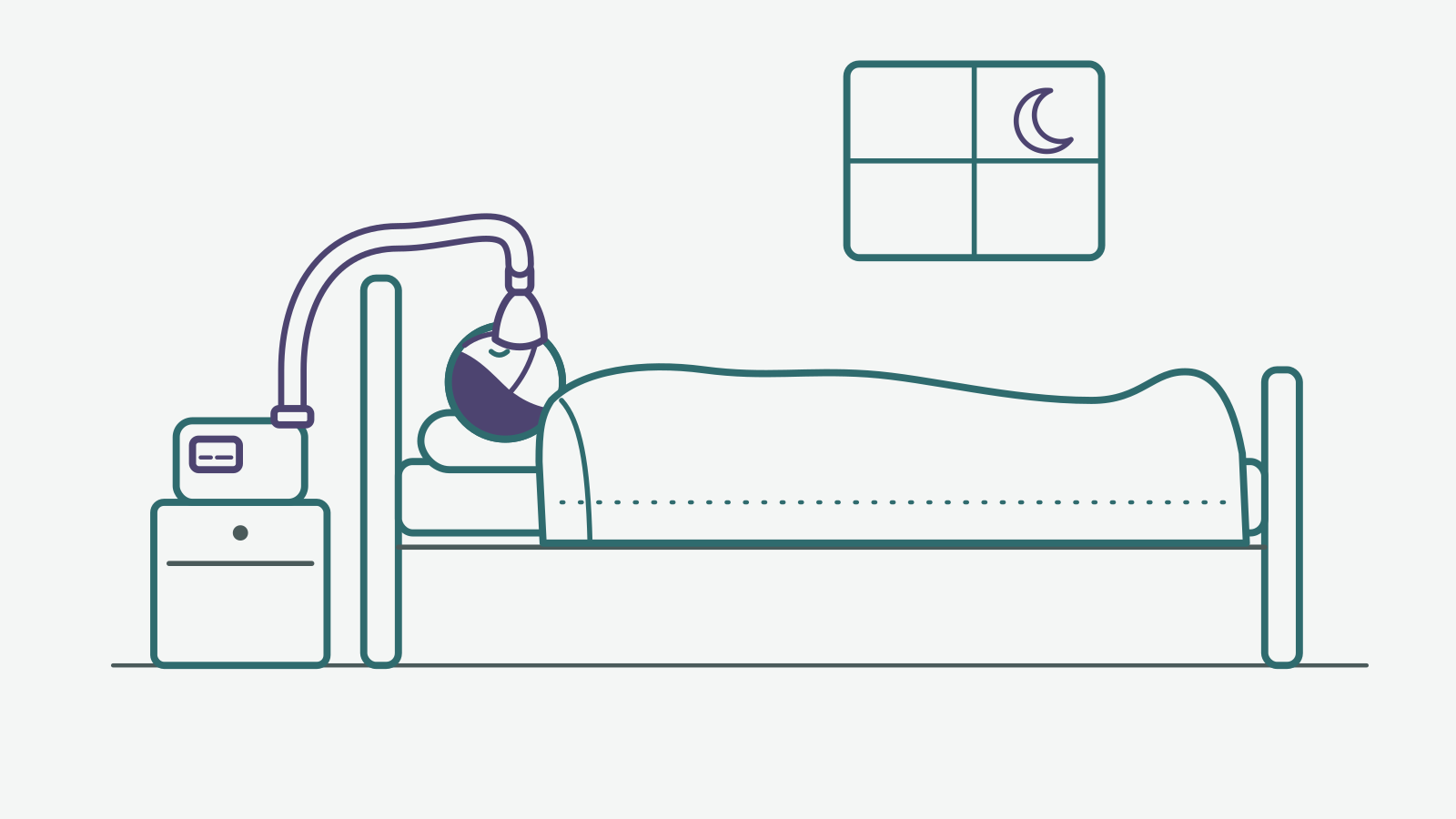
This post summarizes the scientific research I’ve absorbed on the subject of CMT and sleep apnea while also reflecting on my own experience with both.
A 2014 study published in the Journal of Neurology, Neurosurgery & Psychiatry on sleep disorders and CMT concluded “CMT may predispose” people to obstructive sleep apnea and restless leg syndrome. Then, a 2015 study of an extended family with CMT2 found “that patients with CMT, in spite of not showing clinical signs of advanced respiratory impairment, may present subclinical respiratory changes. The respiratory comprise in the CMT disease can be silent and insidious without presenting characteristic clinical signals.”
While nobody does well with regularly impaired or fragmented sleep, it can be worse with CMT and more difficult to assess and treat for all its underlying causes which may emerge slowly and mysteriously over time.
Studies show CMT tends to come with disturbed sleep, depression, and reduced quality of life. 😞
A 2010 survey of 227 people with different types of CMT found they reported a lower overall health-related quality of life (HRQoL) than people without CMT. CMT was also correlated in this study’s result with Restless Legs Syndrome (RLS), especially in women. The survey focused on polling people with CMT about their experience of any fatigue, daytime sleepiness, reduced sleep quality, and restless legs using the Epworth Sleepiness Scale (which measures daytime sleepiness and is often used in screening for sleep apnea, though it can’t diagnose it), the Pittsburgh Sleep Quality Index, the Multidimensional Fatigue Inventory, and the International RLS Severity Scale.
These diagnostic tools can be found online (see the links above) and self-administered if you are trying to get a sense of your sleep quality and whether you may have sleep apnea, RLS, and/or other conditions that make it hard to get good rest. Keep in mind these diagnostic surveys are just educated guesswork. They can flag a risk, but only a sleep test can diagnose sleep apnea, and sleep-medicine guidelines recommend an in-lab overnight study (polysomnography) rather than a home test for people with possible breathing-muscle weakness from a neuromuscular condition.1 I scored in the moderate risk range on most of the apnea-related self-diagnostic surveys, but actual, week-long analysis with a home sleep apnea test machine showed I am often getting a lot more interrupted sleep and low blood oxygen than I ever anticipated.
Body Mass Index (BMI) is a significant factor in most of the sleep apnea diagnostics, which makes sense. With some luck and good habits around exercise/sleep/eating (and their timing), I find I can reduce my apnea symptoms, but even at my best they can be pretty bad. Once in a while I get great sleep and feel refreshed after a late night of drinking too, so go figure! 🍻
Sleep your way to the top (of the Quality of Life charts).
A recent study shows CMT is more likely to come with bad sleep and depression:
Patients with CMT exhibited an increased trend toward depressive symptoms compared with the general population. In addition, CMT patients were exposed to a higher risk of reduced quality of life and significant sleep impairment.
— Cordeiro, J. L., Marques, W., Hallak, J. E., & Osório, F. L. (2014). Charcot-Marie-Tooth disease, psychiatric indicators and quality of life: a systematic review. ASN neuro, 6(3), 185–192. doi:10.1042/AN20130048
It may also work in reverse: if you have disordered sleep and breathing, alleviating those problems might help improve your neuropathy symptoms, as this 2018 case study suggests. In this case study that involves a woman in her 50s, a continuous positive airway pressure (CPAP) machine improved her life a lot: numbness she’d had for six years resolved after she started CPAP for obstructive sleep apnea. That’s a single case, though, so it can’t show the same thing will happen for others.2 Having tested one myself recently with the full face mask, I am impressed they’re almost comfortable. I’m looking for one with a mask that makes me look like Cthulhu or Immortan Joe. 🦑
Newer research (added October 2026): A 2023 study from the Italian CMT registry gave the Epworth and Pittsburgh questionnaires to about 255 people with CMT and 58 controls. Over half of the people with CMT (56%) reported poor sleep quality and 23% had abnormal daytime sleepiness; sleep quality was worse than in the controls on average, though daytime sleepiness scores were not. Poor sleep went along with anxiety, depression, fatigue, and more severe CMT. The study didn’t test for sleep apnea or restless legs, which the authors note also affect sleep, and it concluded that CMT care should include asking about sleep.3 A 2024 Italian report described twin siblings with CMT1A who, around age 40, developed daytime sleepiness and breathlessness lying down and on exertion, were found to have weakness of one side of the diaphragm and impaired breathing at night, and benefited from nighttime non-invasive ventilation. Reviewing the literature, its authors suggest sleep-related breathing problems may be underestimated in CMT1A, even when the neuropathy isn’t severe, and that people with these symptoms should have a lung assessment, pulmonary function tests, and an overnight polysomnogram.4
Sleep Apnea often coincides with CMT1, less with CMT2.
A 2001 study published in The Lancet found that in an extended family with CMT1A, there was a very strong correlation between the CMT and sleep apnea. Subsequent studies have added more support for the conclusion that CMT and sleep apnea are somehow related. (At least this may be true for the demyelinating types of CMT, i.e., CMT1.) Additionally this study found “[t]he severity of neuropathy and sleep apnoea were higher in male CMT individuals and were correlated with age and body mass index.” 👀
A caution about these numbers (added October 2026): These are small studies of selected groups. The 2014 German study found obstructive sleep apnea in 37.7% of 61 people with CMT1, compared with 4.9% of 61 matched control subjects with insomnia, and everyone had overnight polysomnography.5 The CMT2 study discussed next involved 16 people from a single family.6 Together they suggest sleep apnea is more common in some groups of people with CMT1, but they can’t tell us how common it is across CMT as a whole, or reliably rank one subtype against another.
Disturbed sleep is common with CMT2, but Apnea is less often the cause.
People with CMT2, in contrast with CMT1, have shown a lower incidence of sleep apnea while still experiencing disturbed sleep. For this group, daytime sleepiness is commonly reported, and “a reduction in REM sleep, in addition to a high arousal index” has been observed. Also, more severe cases of CMT2 are more likely to be coupled with sleep apnea. (My guess is this is where I’ve landed myself.)
Why and how CMT may cause respiratory and cardio-pulmonary problems
In some Japanese case studies (1992, 2000), and a (2006) Belgian case report, CMT was associated with phrenic nerve impairment and diaphragm dysfunction. (The phrenic nerve travels from the spinal cord to the diaphragm.) In the past, these were considered “rare” cases. However, a 2005 study argued diaphragm weakness “may be more common than generally acknowledged” with CMT.
👉 There’s a Facebook Group for people dealing with phrenic nerve impairment, and the CMTA has some useful information about it in relation to breathing problems and CMT.
Diaphragm dysfunction and phrenic nerve involvement may complicate the effects of apnea but do not cause it.
Notably, neuropathy-related diaphragm weakness is not a cause for sleep apnea. It might complicate apnea by keeping too much carbon dioxide and too little oxygen in one’s bloodstream, but the apnea likely has a cause higher up the respiratory system: pharyngeal muscles and nerves affected by neuropathy. This has been observed with CMT2C, but there was a countering opinion to the extended family study in 2001 that questioned how central sleep apnea, which commonly coincides with CMT, could have a cause in neuropathy as obstructive sleep apnea might. In response to this objection, which assumes most CMT and sleep apnea cases involve central sleep apnea, the original researchers linking CMT, the pharyngeal nerve, and sleep apnea said they believe there is significant overlap between central and obstructive sleep apneas, so “pharyngeal neuropathy, combined with hypocapnia, accounts for [both] obstructive and central sleep apnoeas.” (My emphasis.)
A correction (October 2026): The paragraph above goes too far. Diaphragm weakness doesn’t cause the airway blockage of obstructive sleep apnea, but it is a recognized cause of breathing problems during sleep, and the 2007 review summarized below links central sleep apnea with diaphragm dysfunction. The CMTA’s current guidance lists obstructive and central sleep apnea and nocturnal hypopnea among the sleep-breathing problems CMT can bring, and it says the right treatment depends on whether the breathing muscles are weak: CPAP, BiPAP, or VPAP usually work well for obstructive sleep apnea without muscle weakness, while volume-assured pressure support (AVAPS or iVAPS) is preferred when weakness is present.7 That’s a question for a sleep specialist or pulmonologist, not something to decide from a diagnosis of CMT alone.
A 2007 meta-review (synthesis of research to date) of “Disorders of Pulmonary Function, Sleep, and the Upper Airway in Charcot-Marie-Tooth Disease” constellates “restrictive pulmonary impairment, sleep apnea, restless legs, and vocal cord dysfunction.”
Key findings:
- The pulmonary impairment may be caused by “phrenic nerve dysfunction, diaphragm dysfunction, or thoracic cage abnormalities.”
- The central sleep apnea “may be associated with diaphragm dysfunction and hypercapnia, whereas obstructive sleep apnea has been reported as possibly due to a pharyngeal neuropathy.”
- “Restless legs and periodic limb movement during sleep are found in a large proportion of patients with CMT2, a type of CMT associated with prominent axonal atrophy.”
- “Vocal cord dysfunction, possibly due to laryngeal nerve involvement, is found in association with several CMT types and can often mimic asthma.”
My takeaways:
After reading through this literature and thinking about my own experience, it seems pretty clear that sleep apnea has a lot of possible causes, and CMT can cause some of those causes, making CMT only indirectly related but still related. CMT definitely tends to put a damper on mobility and therefore your physical activity and exercise. Lack of exercise makes it even harder to keep your weight down as you age. Lack of exercise, weight gain, and aging with a progressive disability do nothing to prevent anxiety and depression, which many people respond to by over-eating and sedentary living. Even if you weather this all pretty well, your CMT-related pain and mobility impairment is still a grind that only gets worse. Driving up BMI alone highly increases your risk for sleep apnea, so if there is one thing you can do to help yourself, it’s to keep your weight down — a key to health and longevity for everyone.
BiPAP, CPAP, or NIV?
If you are diagnosed with sleep apnea, you’re likely to be told you need a nighttime assistive breathing device like a CPAP machine. However, CMT and any other breathing-related abnormalities you have may complicate the question of what device is best for you and which might actually be harmful. The 2007 meta-review I summarized above states:
There may be special therapeutic considerations for the treatment of those conditions in individuals with CMT. For instance, bi-level positive airway pressure [BiPAP] may be more appropriate than continuous positive airway pressure (CPAP) for the treatment of sleep apnea in the individual with concomitant restrictive pulmonary impairment.
— “Disorders of Pulmonary Function, Sleep, and the Upper Airway in Charcot-Marie-Tooth Disease“
This possibility of BiPAP machines being better than CPAP for some CMT cases is echoed and asserted even more strongly in Dr. Ashraf Elsayegh’s pulmonary care article on the CMTA website (archived copy), which also recommends other types of Non-Invasive Ventilation (NIV) machines as generally (or at least sometimes) preferable to CPAP machines, although some CPAP devices now include some responsive, variable pressure features.
Dr. Elsayegh’s article and this talk he gave in 2018 explains the conditions under which he recommends different devices:
If you have been diagnosed with sleep apnea and have CMT, Dr. Elsayegh says an overnight sleep study should be done. This will help identify whether you have central or obstructive sleep apnea and whether any muscle weakness is impacting your night time breathing. Lung/breathing tests can also be done at a lab or hospital. Normally these tests are done while sitting or standing, but diaphragm weakness may show itself in results if the tests are done in different postures, including lying down. Since this was written, a 2023 CHEST guideline on respiratory care for people with neuromuscular weakness has recommended individualized settings for non-invasive ventilation, with polysomnography or overnight oximetry used where available to guide starting it. Its authors note that the evidence is limited and comes mostly from ALS.8
While it is quite rare with CMT in otherwise healthy people, if you are not able to take in enough oxygen and/or exhale enough carbon dioxide while you are sleeping, getting the right supportive device is critical. Both hypoxemia and hypercarbia can be caused by sleep apnea. (Hypoxemia is when you have very low blood oxygen levels. Hypercapnia or hypercarbia refers to elevated carbon dioxide levels in the bloodstream.)
I am still working through CMT and sleep apnea diagnoses myself, so please let me know if I missed something or got it wrong. All tips, resources, and related questions are very appreciated too! 🙏🏻 How have you dealt with CMT and sleep apnea?
This post was updated on October 10, 2026: Clarified that sleep questionnaires (including the Epworth scale) screen for risk but can’t diagnose sleep apnea, and that an in-lab sleep study is recommended over a home test when breathing-muscle weakness is possible; qualified the single 2018 case report; added newer research from 2023 and 2024 and a 2023 CHEST guideline; added cautions on how far the small CMT1/CMT2 studies can be generalized; and added a correction to the section saying diaphragm weakness doesn’t cause sleep apnea, with the CMTA’s current guidance on choosing breathing devices.
Notes
- Kapur et al., “Diagnostic Testing for Adult Obstructive Sleep Apnea.” ↩︎
- Polat et al., “Improvement of Neuropathy Symptoms.” ↩︎
- Bellofatto et al., “Daytime Sleepiness and Sleep Quality.” ↩︎
- Massucco et al., “Respiratory Involvement and Sleep-Related Disorders.” ↩︎
- Boentert et al., “Sleep Disorders.” ↩︎
- Souza et al., “Sleep Pattern.” ↩︎
- Charcot-Marie-Tooth Association, “Breathing and Respiratory Care.” ↩︎
- Khan et al., “Respiratory Management.” ↩︎
Sources
- Bellofatto, Marta, Luca Gentile, Alessandro Bertini, et al. “Daytime Sleepiness and Sleep Quality in Charcot-Marie-Tooth Disease.” Journal of Neurology 270, no. 11 (2023): 5561–5568. https://doi.org/10.1007/s00415-023-11911-y.
- Boentert, M., K. Knop, C. Schuhmacher, B. Gess, A. Okegwo, and P. Young. “Sleep Disorders in Charcot-Marie-Tooth Disease Type 1.” Journal of Neurology, Neurosurgery & Psychiatry 85, no. 3 (2014): 319–325. https://doi.org/10.1136/jnnp-2013-305296.
- Charcot-Marie-Tooth Association. “Breathing and Respiratory Care.” Accessed October 14, 2026. https://cmtausa.org/cmt-breathing/.
- Kapur, Vishesh K., Dennis H. Auckley, Susmita Chowdhuri, et al. “Clinical Practice Guideline for Diagnostic Testing for Adult Obstructive Sleep Apnea: An American Academy of Sleep Medicine Clinical Practice Guideline.” Journal of Clinical Sleep Medicine 13, no. 3 (2017): 479–504. https://doi.org/10.5664/jcsm.6506.
- Khan, Akram, Lindsy Frazer-Green, Reshma Amin, et al. “Respiratory Management of Patients with Neuromuscular Weakness: An American College of Chest Physicians Clinical Practice Guideline and Expert Panel Report.” Chest 164, no. 2 (2023): 394–413. https://doi.org/10.1016/j.chest.2023.03.011.
- Massucco, Sara, Cristina Schenone, Elena Faedo, et al. “Respiratory Involvement and Sleep-Related Disorders in CMT1A: Case Report and Review of the Literature.” Frontiers in Neurology 14 (2024): 1298473. https://doi.org/10.3389/fneur.2023.1298473.
- Polat, Pinar, Huong Pham, Jun Li, and Kanika Bagai. “Improvement of Neuropathy Symptoms with Treatment of Obstructive Sleep Apnea in a Patient with Charcot-Marie-Tooth Disease.” Journal of Clinical Sleep Medicine 14, no. 2 (2018): 289–291. https://doi.org/10.5664/jcsm.6956.
- Souza, Cynthia C., Camila Hirotsu, Eduardo L.A. Neves, et al. “Sleep Pattern in Charcot-Marie-Tooth Disease Type 2: Report of Family Case Series.” Journal of Clinical Sleep Medicine 11, no. 3 (2015): 205–211. https://doi.org/10.5664/jcsm.4526.
Leave a Reply